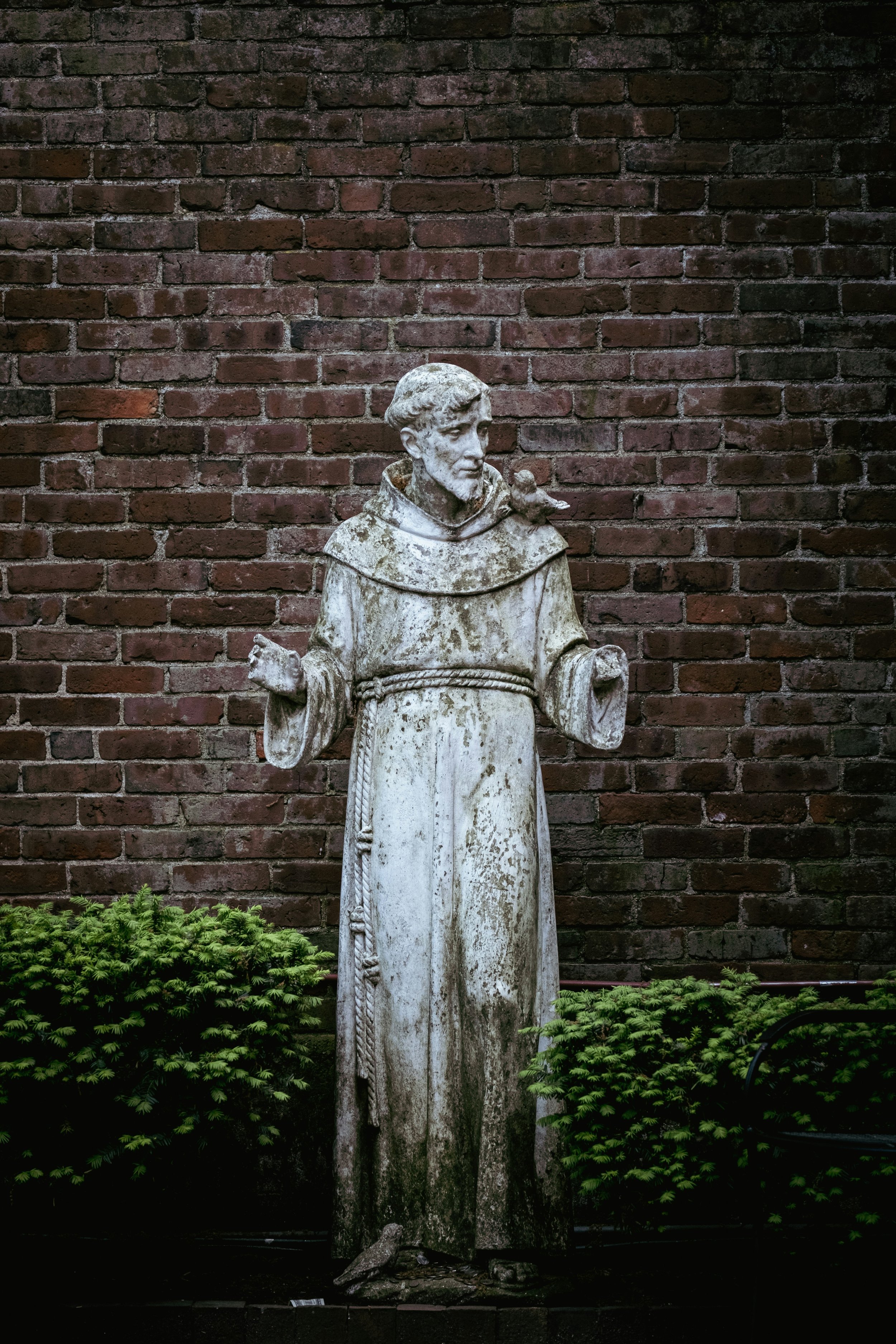
The Lord Will Change Us
St. Francis of Assisi (Giovanni di Pietro di Bernardone) was born in the 12th Century in Assisi, Italy. He was not a saint, nor even closely associated with a love for God’s creatures.
Rather, he was the son of a wealthy merchant and lived a very comfortable worldly life. He had aspirations of becoming a knight and went on to fight, but was captured.
It was during his early 20’s, this time of imprisonment and shortly after, that Giovanni had a spiritual awakening.
He sought a life of poverty and service to God.
By 1209, he formed the Order of Friars Minor (Franciscans).
As part of his poverty, he lived in a very run-down house that was full of mice and rats. It was not an enjoyable experience, and something he struggled with.
It wasn’t until he surrendered to the Lord that he began to see all of creation as a reflection of the Creator and started to call the rodents brothers and sisters.
Ironic - considering he is now so well known as the saint who loves and is keeper of the animals.
His love for animals was not the cause of his holiness—it was a fruit of his union with God.
St. Francis of Assisi developed a love for animals and nature, which was rooted in his love for God.
His famous Canticle of the Sun praises God through the elements of creation (Brother Sun, Sister Moon, etc.).
In 1224, while in deep prayer, Francis received the stigmata—the wounds of Christ—becoming the first recorded person in Christian history to bear them.
He spent his final years in great suffering, illness, and blindness, yet remained joyful and faithful.
St. Francis of Assisi
Feast Day: October 4
Patron Saint of: Animals, ecology, the environment, and Italy.
Here is a man, Giovanni di Pietro di Bernardone, born worldly, who didn’t concern himself with anything other than his future and success.
Yet, through a spiritual awakening and a lifetime of surrender and love for God, he became a Saint and a renowned icon for a love of animals, even the small ones that plagued him in his poverty and blindness. 🐁
Oh, how the Lord will change us if we love Him enough to let Him.